
| Symptom | First action | Planning use |
|---|---|---|
| Slumping in a chair | Bring shoulders, hips and knees to even heights and keep the chin parallel to the floor | Use as the quick seated check at any desk or table |
| Leaning or tipping forward when standing | Centre weight over the feet and spread it evenly on both feet | Use as a standing check while queuing or cooking |
| Upper body pulled forward, tight hips | Stretch the tight hip muscles | Pair with core work in a regular routine |
| Slumping that returns as you tire | Build strength in the back, side, pelvis and buttock muscles | Plan regular strength sessions rather than one-off corrections |
| Head dropping towards a laptop screen | Raise the screen so the chin can stay parallel to the floor | Fix the setup before trying to fix the habit |
| Back pain that lingers or worries you | Ask a doctor | Do not rely on posture changes alone |
The checks above follow the guidance in Harvard Health’s explanation of why good posture matters.
Learning how to improve posture starts with centring weight over the feet when standing, keeping shoulders, hips and knees at even heights when sitting, and building core strength. Comfort, not rigidity, is the test.
Posture is one of the more controllable parts of daily health, and it sits naturally alongside other abitudini per il benessere quotidiano. The sections below separate what posture change can reasonably achieve from the habits, exercises and desk adjustments that make it easier to hold.
What posture change can and cannot fix
Posture describes how the spine and body are arranged against gravity, and it is shaped as much by muscle strength and flexibility as by willpower. Harvard Health links weak core muscles to slumping that tips the body forward and off balance. It also notes that overly tight, shortened hip muscles can tug the upper body forward. That means a person who “sits up straight” through effort alone is fighting their own muscles, and the effort usually fades within minutes.
The common belief is that correct posture cures back pain. The supported claim is narrower: strength, flexibility and sensible positions improve posture itself. Whether a given person’s back pain eases is a separate question, and it varies. A useful rule is to judge each change by how the body feels afterwards. A position that looks textbook-perfect but feels strained is a poor target.
The same applies to the idea of a single correct posture. Harvard describes a neutral spine as one without flexing or arching that exaggerates the curve in the lower back. Treat that as a reference point to return to between movements, not a pose to freeze into.
Daily habits for standing and sitting
Standing
Standing straight centres body weight over the feet, as Harvard Health explains, and that is the simplest single cue to practise. Pair it with weight spread evenly on both feet and hips and knees that sit level with each other. If one leg always takes the load, the pelvis tilts and the rest of the spine follows.
- Check the lower back. Aim for a neutral spine, neither flattened nor deliberately arched.
- Use a mirror. A side-on glance in a mirror shows leaning that is hard to feel from the inside.
Sitting
When seated, Harvard advises keeping shoulders, hips and knees at even heights, with knees and feet pointing straight ahead and the chin parallel to the floor. These cues work in any chair, which makes them more practical than rules tied to one piece of furniture. If a cue feels forced after a short time, change position rather than clenching harder. Moving between comfortable positions is easier on the body than holding any single one.
Exercises for bad posture
The most useful exercises for bad posture do two jobs, according to Harvard Health: they build strength where it counts and stretch tight muscles. Strength work targets the core muscles, which Harvard describes as the back, side, pelvis and buttock muscles forming a sturdy central link between the upper and lower body. Stretching targets the tight hip muscles that pull the upper body forward.
- Strengthen the core. Choose exercises that work the back, sides, pelvis and buttocks rather than only the abdomen. A structured plan such as strength training for beginners is a sensible way to start without guesswork.
- Loosen the hips. If you sit for long stretches and feel pulled forward when you stand, include hip stretches in the same session.
- Check form in a mirror. Harvard suggests quick posture checks in the mirror before and during balance exercises, which catches drifting alignment early.
Strength and stretching work best together. Strengthening a core while leaving the hips tight, or the reverse, leaves half the problem in place. Anyone with an injury or ongoing pain should ask a doctor or physiotherapist before starting a new routine.
Ergonomic desk setup
An ergonomic desk setup lets the body stay in the seated cues above without effort. Start from the body and arrange the equipment around it, instead of adapting the body to whatever is on the desk.
- Set the chair. Sit so that shoulders, hips and knees are at even heights, as Harvard Health describes.
- Point knees and feet forward. Keep them straight ahead rather than twisted to one side under the desk.
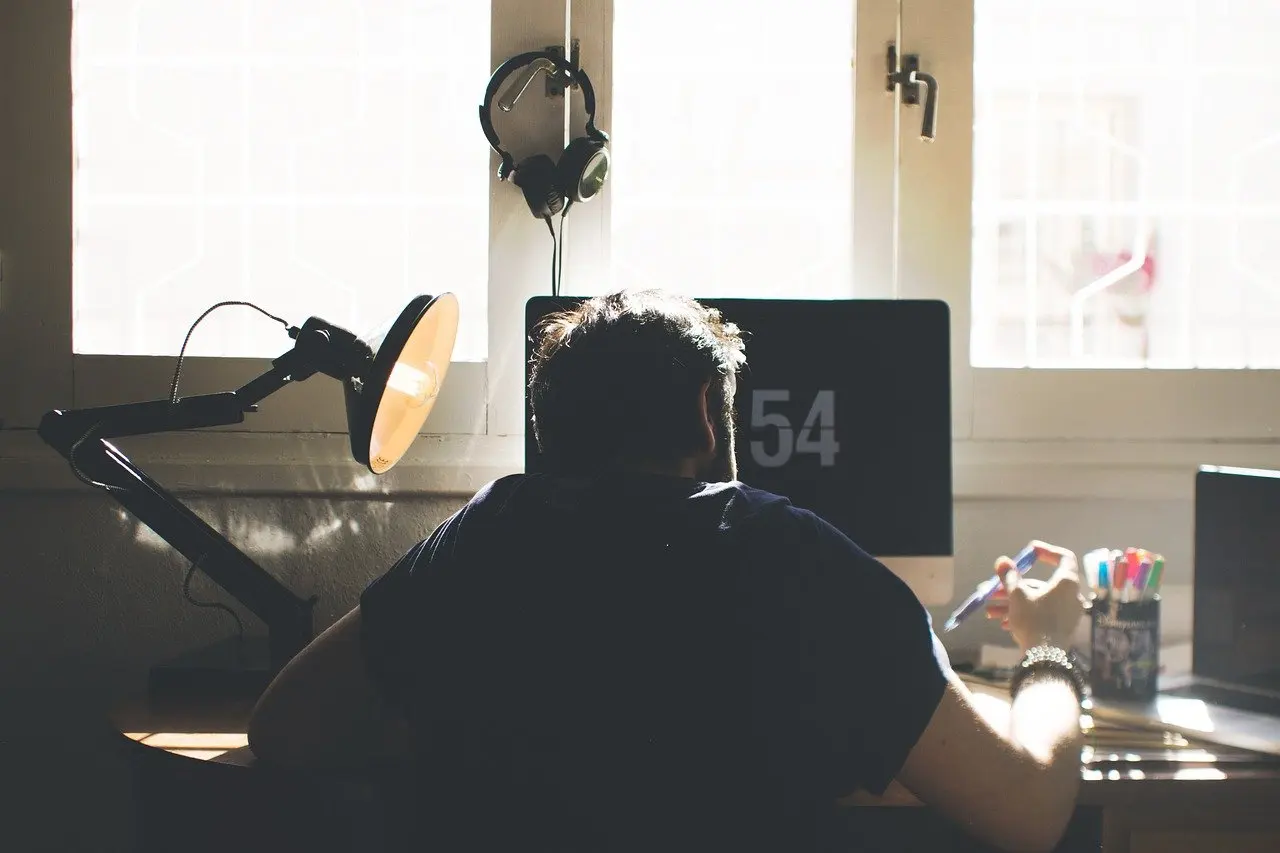
- Place the screen. Position the monitor where the chin can stay parallel to the floor, so the head is neither craning up nor dropping down.
- Bring work to you. Keep the keyboard and mouse close enough that the shoulders stay level and relaxed instead of reaching forward.

Multiple monitors raise the stakes for placement. If one screen is used most of the time, centre it in front of the chair and keep the secondary screens off to the side. Constant turning to one side works against the even shoulders and hips you are trying to keep.
Adjust one item at a time and give each change a short trial. If a new setting feels worse, undo it. The aim is a workstation that lets you shift position without having to rebuild it.
Laptops, sofas and other awkward seats
A laptop on the knees on a sofa is the setup that most often undoes good habits, because the screen sits low and the chin follows it down. Under Harvard’s seated cues, that head position is the opposite of keeping the chin parallel to the floor.

If the laptop must be used away from a desk, raise the screen or move the work to a table for anything longer than a quick task. A sofa is fine for short, light use. For longer sessions, a proper seat that allows knees and feet to point straight ahead is the better choice.

Whatever the seat, change position regularly. Standing up, walking briefly and sitting back down resets the body, and it is easier to do than maintaining one perfect position.
When back pain should be checked by a doctor
Posture advice is general information, and Harvard Health states that its content should not be used as a substitute for direct medical advice from a doctor. Book an appointment if back pain is severe, keeps returning, gets worse, or comes with symptoms that worry you. Do the same if pain stops you doing normal daily activities.
Habit changes are reasonable to try alongside that advice, but they should not delay it. A clinician can identify causes that no posture adjustment will address.
Frequently asked questions
| Question | Answer |
|---|---|
| Does posture correction work? | Increasing core strength and flexibility can improve posture noticeably in just a few weeks, according to Harvard Health. That result is about posture itself, so judge pain relief separately by how you feel. |
| Is poor posture always a bad habit? | No. Harvard notes that poor posture is not necessarily a bad habit, since weak core muscles and tight hip muscles can pull the body out of alignment regardless of intent. |
| What is the quickest check when standing? | Stand with weight centred over both feet and a neutral lower back, then glance side-on in a mirror to confirm. |