

Work overruns, dinner is improvised and the evening dissolves into a phone: come organizzare la giornata in modo equilibrato means fixing a few anchors, such as work blocks, meal times and a shutdown, and adjusting them weekly.
Balance here is a set of small routines, not a mood. Each routine is small enough to change from week to week. Each section points to a deeper guide when food, money, screens or the home need more attention than a general plan can give.
Choose a route by what feels hardest
Balance rarely fails everywhere at once, so start where the strain is most obvious and add the other routes later. Each route below is ordered so that the first step makes the next one easier.
- The week feels overloaded. Read the weekly planning section first. Then set up a sunday reset routine so the coming days are laid out before Monday begins.
- The day has no shape. Begin with energy and anchors, move to the work-hours methods, and finish with the evening shutdown.
- Food is always improvised. Go to the meals section, then use the guide on how to meal plan for the week for the full method.
- Money and home feel scattered. Use the home and money sections, with budgeting for beginners as the entry point for spending.
- Evenings disappear. Go straight to the rest and shutdown sections.
Keep only one route active at a time. Starting a second route before the first feels automatic risks turning a plan into a to-do list that nobody keeps.
Building the day around energy and anchors
A balanced day starts from the body’s rhythm, then fixes a few times that rarely move. A chronobiology article by Giuseppina Di Carlo describes the body’s functions as running in a 24-hour rhythm. That makes the shape of the day a practical design question, not only a matter of willpower.
Find the hours when focus is highest
People differ in when they concentrate best. A Syracuse University productivity guide places the most focused work of early birds in the morning and that of night owls in the later afternoon or evening. Its advice is to schedule the most demanding tasks for the times of day when a person feels most alert.
The decision is simple. Put the task that needs the most thought into the strongest window, and leave email, errands and admin for the weaker hours. A night owl with a fixed morning commute cannot always move the demanding task, so the realistic version is to protect whichever strong window the job allows.
Time coffee around the morning peak
The same Di Carlo article suggests delaying the first coffee until cortisol begins to fall, after about 9:00. It also notes that caffeine stays active for roughly 3 to 7 hours. A late-afternoon cup therefore still has an effect in the evening, which matters for anyone who wants an easy bedtime. Treat the 9:00 mark as a suggestion to test against your own morning, not a rule.
Anchoring habits to fixed times
Habit formation works best when a new behaviour is attached to something that already happens. A routine is easier to keep when each task has a place. The Ed Collaborative time-management guide recommends assigning tasks a specific time slot, and creating a schedule that works for you and sticking to it.
A starting sequence that follows this advice:
- Note the hours when attention is strongest and place the hardest task there.
- Give every fixed commitment, including meals and breaks, a time slot on the page.
- Choose an end-of-work time and treat it as a commitment.
- Keep the schedule unchanged for a few days before adjusting it, so that changes respond to evidence and not to one bad afternoon.
Managing time inside work hours
Time management during work hours comes down to protecting blocks of focus and containing interruptions. Email is the clearest example. Di Carlo’s article says email handling can take up to 25% of time at work. It suggests two fixed windows, one in the morning and one at the end of the day.
The Syracuse guide gives a similar pattern, checking messages at set intervals such as 11:00 AM and 4:00 PM. The exact hours matter less than the rule that messages are not checked between windows. Choose times that fit when colleagues or clients genuinely expect replies. If the job requires instant responses, shorten the gap between windows instead of abandoning them.
Four methods compared
The methods below solve different problems, so choosing one depends on what disrupts the day.
| Method | How it works | Suits | Watch for |
|---|---|---|---|
| Pomodoro | Focused intervals of 25 minutes, with a longer break of 20 to 30 minutes after every four rounds | Tasks that are easy to postpone or tedious to start | Work that cannot be interrupted at the timer, such as a call that overruns |
| Time blocking | Dedicated blocks for focused work, planned to minimise scheduling conflicts | Days with several competing demands | Packing blocks so tightly that one delay disrupts the whole day |
| Fixed message windows | Messages checked only at set times, such as 11:00 AM and 4:00 PM, or morning and end of day | Roles with constant notifications | Colleagues who expect a faster reply, which means the windows need explaining |
| Short hourly pause | Stopping what you are doing for a few minutes every hour | Long desk sessions | Skipping it when work feels productive |
The Pomodoro, time-blocking and message-window details come from Syracuse University’s productivity guide, and the hourly pause and morning and end-of-day email windows come from Di Carlo’s chronobiology article.
Pomodoro suits anyone who struggles to begin. Time blocking suits anyone whose day is fragmented by meetings. Message windows suit anyone whose attention is broken by notifications. They also combine well. Block the morning for focused work, run Pomodoro inside the block, and keep messages for the windows.
Planning a week without feeling overloaded
A week feels manageable when each commitment has a place and the plan leaves room to move. Overload usually comes from stacking tasks into the same hours, not from having too many tasks overall. The cure is assigning each task a specific time slot, as the Ed Collaborative guide advises, and checking that the demanding ones sit at alert times.
Build the week in layers
Work through the week in a fixed order, so that fixed obligations are not squeezed by optional ones.
- Fixed commitments first. Work hours, appointments and school or care duties go on the page before anything flexible.
- Demanding work next. Place focused blocks in the windows when attention is highest, as described earlier.
- Household tasks after that. A simple house cleaning schedule spreads chores across the week so no evening is lost to catching up.
- Rest and leisure as appointments. Write them down too. Time that is only intended tends to be given away to the next request.
Check the load before the week starts
Look across the planner for days that are visibly heavier than the rest, and move one flexible task off the heaviest day. A plan with every slot filled leaves nothing for the unexpected, so some blank space is part of the design.
How much time to leave for rest
Rest is best planned as several small recurring pieces, not a single daily total. The evidence gathered here describes these pieces and the limits that keep them useful.
Breaks during the working day
Di Carlo’s article suggests interrupting work every hour for a few minutes. The Pomodoro pattern in the Syracuse guide adds a longer break of 20 to 30 minutes after every four rounds. The same guide cites a remote-work study in which breaks spent outside were associated with improved well-being. A short walk outdoors is therefore a better use of a break than another screen, though the study shows an association and not a guaranteed effect.
The afternoon nap
For a nap, Di Carlo suggests a maximum of 40 minutes. Treat that as a ceiling, not a target. A shorter nap fits more easily into most working days, and a rest that stops at the limit is easier to repeat than one that overruns.
Evening wind-down
The same article suggests switching screens off two hours before bed and keeping any evening social-media window to no more than 30 minutes. Those figures are suggestions, so adapt them to the evening you actually have. The guide on how to reduce screen time covers practical ways to make that cut-off stick, and a replacement activity helps. A book on the bedside table does more than willpower alone, and the guide on how to make time for hobbies covers where that activity can fit.
For readers who want rest to feel less rushed in general, what is slow living explains an approach built on unhurried daily practices.
Ending the work day cleanly
Work-life balance depends on a clear edge between work and the rest of the evening, particularly when work happens at home. The Syracuse guide recommends creating physical distance from the workspace at a set time each evening. That means closing the laptop and putting it out of sight, not simply stopping.
The same guide suggests a fake commute, such as a 15-minute walk or reading a non-work book, as a transition between roles. The point of the transition is to mark the change in mental state. Choose a ritual short enough to survive a bad day, because a long ritual will be the first thing dropped when work overruns.
- Set the shutdown time first. The time must be stated in advance, otherwise there is always one more task.
- Close the workspace physically. A cleared desk or a shut laptop bag removes the visual prompt to keep going.
- Use the transition walk. It works as the end of the day, and it also gives the outdoor break that the remote-work study associated with better well-being.
Meal planning that stays practical on a budget
Meal planning is easiest when the plan is small enough to follow on an ordinary Tuesday. Deciding meals in advance removes the daily question of what to cook. It also gives the shopping list a clear purpose. A meal-planning guide from ConserveFood.org offers practical tips and a downloadable planner for exactly this routine.
Match meals to the rhythm of the day
Di Carlo’s article suggests eating every three hours across the day. This can help when long gaps lead to impulsive food choices. It suits people who feel low in the afternoon, though a different pattern may suit others better. Use it as a prompt to plan snacks and not only main meals.

Keep the budget version simple
An economical plan relies on a few habits, not special recipes.
- Plan around what is already at home. Cooking existing ingredients first protects the budget, and the guide on how to reduce food waste at home shows how.
- Shop from the plan. A list built from the week’s meals keeps spending focused, and how to grocery shop smart develops this step.
- Prepare in batches. A short cooking session ahead of busy days makes the plan realistic, and how to meal prep on a budget covers it in detail.
Home routines that protect the evening
A home that resets itself in small steps leaves evenings free for rest. Tidying belongs in the weekly layers described above, not in a Saturday marathon that swallows the free day. The entryway is a good place to start, because a coat rack and a small shelf decide how much clutter reaches the rest of the home.
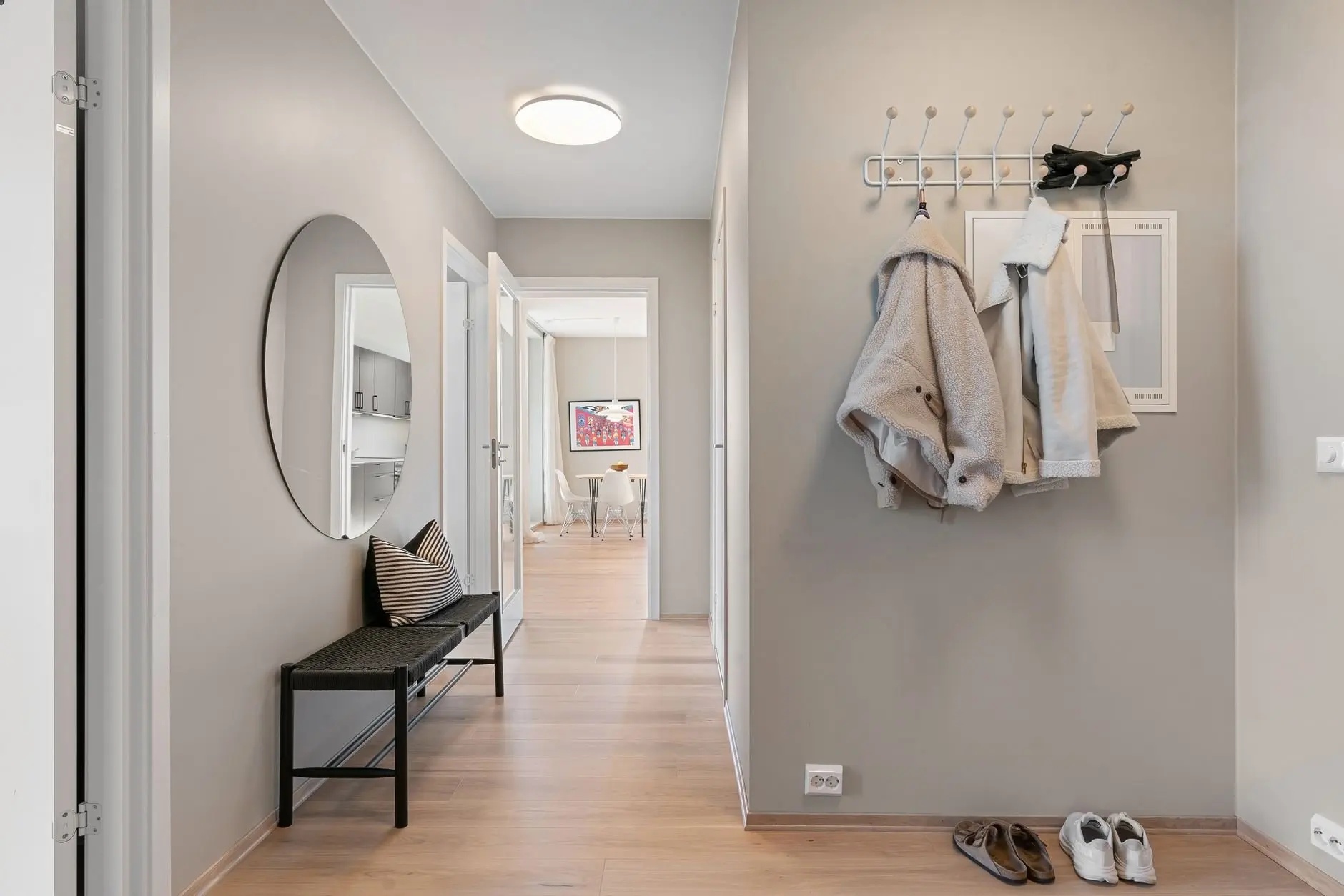
Two other areas repay a little thought. The first is clothing. Fewer, easily combined items shorten the morning decision, and the guide on how to build a capsule wardrobe explains the idea. The second is energy use. Small habits around heating, lighting and appliances make the home cheaper to run, and how to save energy at home lists them.
Money routines that keep daily life steady
Financial calm comes from a short, regular routine, not from a perfect system. Budgeting works best when it is attached to a weekly habit, such as checking spending during the planning session, so that it is not left until a problem appears.
A sensible order follows three steps.
- Record where money goes. The guide on how to track household expenses compares simple methods.
- Create a cushion for surprises. How to build an emergency fund explains why this comes before other goals.
- Plan predictable but irregular costs. What is a sinking fund describes setting money aside for expenses you know are coming.
Finances are a source of daily stress, so these routines support balance even when no time is saved directly.
Keeping the routine adjustable
A routine that cannot change will eventually be abandoned, so a weekly review matters as much as the plan itself. The aim is a routine that fits real weeks, including the ones with late meetings, illness or visitors.
- Keep the anchors, flex the rest. The shutdown time and a few meals stay put. Everything else moves when the week demands.
- Change one thing at a time. Altering several variables makes it impossible to tell what helped.
- Drop what never works. A step skipped repeatedly points to a bad fit, not a lack of discipline. Replace it with something smaller.
- Match the routine to the season of life. A plan suited to a quiet month may need to shrink during a demanding one, and that is a normal adjustment.
Balance, treated this way, is a set of routines that can be adjusted by small steps. The best starting point is whichever route from the opening section matches the area that currently feels hardest.
Frequently asked questions
| Question | Answer |
|---|---|
| Who created the Pomodoro Technique? | According to Syracuse University’s productivity guide, Francesco Cirillo created it in the 1980s. It is one option among several, so no one needs to use it to plan a balanced day. |
| Is there a ready-made meal planner to download? | The ConserveFood.org meal-planning guide provides a downloadable planner alongside its tips, which gives a starting template for a budget-minded weekly plan. |
| Which meal should be the biggest? | Di Carlo’s chronobiology article says lunch should be the main meal of the day. Anyone whose lunch break is short can still apply the idea by planning a more substantial midday meal in advance. |
| Does television count when switching screens off before bed? | Yes. The same article names the television explicitly, so the evening switch-off covers every screen, not just the phone. |